
The BRAP 2024 Christmas Webinar, the last installment of the BRAP Twin Talks Webinar Series, has just concluded, marking the culmination of an enriching and insightful journey.
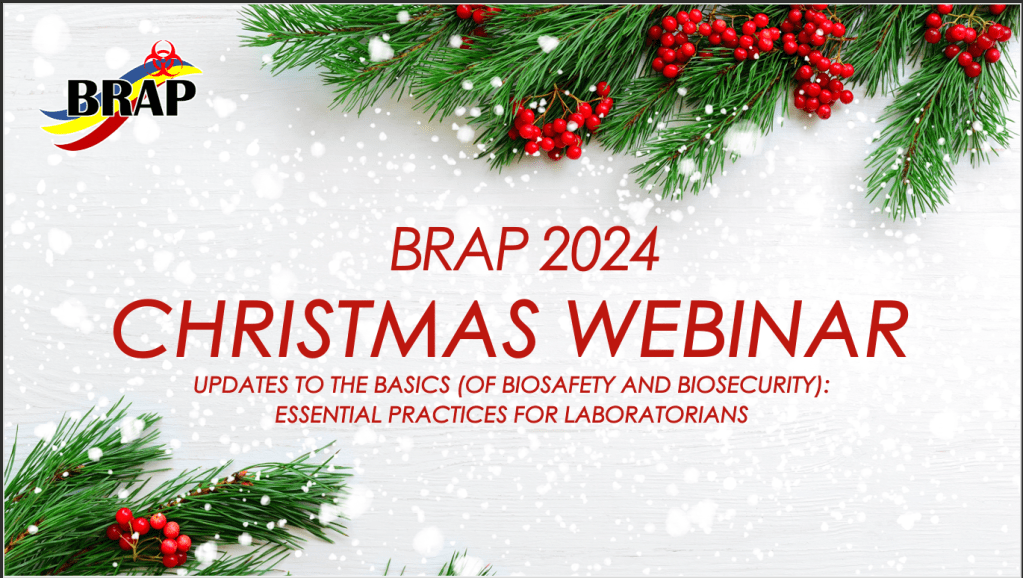
We extend our heartfelt gratitude to our esteemed main speakers, BRAP incumbent president Mr Ronnie Puno and BRAP founding fresident, Dr Miguel Martin Moreno, for their unwavering commitment and exemplary leadership. Our deepest thanks also go to Hon. Leila Lany M. Florento for her invaluable expertise and dedication as the webinar’s moderator.

Acknowledging with thanks to Ms. Micahella B. Sayo for giving the Welcome and Opening Remarks of the webinar.

We are equally grateful to our panel discussants—Ms. Maria Bea Lao (Bea Cua), Prof. Oliver Dumaoal and Dr Jose M. Obedencio Jr (Jo Obs)—for sharing their extensive knowledge and sharing their experiences.
A rare sight when the 5 Pillars of BRAP are all together in one shot. Dr. Socorro P. Lupisan-Moreno (bottom left), former Director of DoH-RITM, graces the webinar with a short hi and hello during the panel/collaborative discussion. FYI, The 5 Pillars of BRAP are (1) Dr. Martin Moreno, (2) Dr. Leila Florento, (3) Mr. Ronnie Puno, (4) Mr. Ariel Aquino and (5) Dr. Socorro Lupisan-Moreno.
Collaborative / Panel Discussion

More importantly, we sincerely thank our members for their support throughout the Twin Talks series. Your active participation and engagement have been the driving force behind its success.
We hope to see you all again next year for our next webinar series – BRAP 2025 “Net On Board”!
Synopsis of the Christmas webinar
Biosafety and biosecurity are crucial components of laboratory management across clinical, academic, and research settings. They ensure the safe handling, containment, and disposal of biological materials, protecting both people and the environment from potential hazards. Here are some key points highlighting their significance:
Biosafety
1. Protection of Personnel: Biosafety protocols aim to prevent lab-related infections by ensuring that researchers and laboratory workers are not exposed to hazardous biological agents. This includes the use of personal protective equipment (PPE), proper hygiene practices, and training.
2. Prevention of Environmental Contamination: Proper biosafety measures prevent the release of infectious agents into the environment, which could affect wildlife, agricultural resources, or the general public.
3. Compliance with Regulations: Laboratories must comply with local, national, and international regulations regarding the handling of biological materials. Adhering to biosafety standards helps labs avoid legal issues and potential fines.4. Quality and Integrity of Research: Contamination can compromise experimental results and data integrity. Biosafety measures reduce the risk of contamination, ensuring more reliable and reproducible results.
4. Quality and Integrity of Research: Contamination can compromise experimental results and data integrity. Biosafety measures reduce the risk of contamination, ensuring more reliable and reproducible results.
5. Emergency/Incident Management: Well-established biosafety protocols prepare laboratories to effectively manage spillages, exposures, or other emergency situations involving biological materials, minimizing harm and disruption.
Biosecurity
1. Prevention of Misuse: Biosecurity measures help prevent the theft, loss, or misuse of pathogens and toxins that could be used maliciously, including for bioterrorism.
2. Control of Access: Implementing strict access controls ensures that only authorized personnel can handle sensitive biological materials, reducing the risk of accidental or intentional breaches of security.
3. Inventory Management: Accurate tracking and inventory of biological agents deter diversion or unintended distribution, ensuring that materials are accounted for at all times.
4. Training and Awareness: Educating lab personnel about biosecurity helps them recognize potential threats and understand the importance of vigilance in protecting sensitive biological materials.
5. Interinstitutional Collaboration: Effective biosecurity policies facilitate collaboration between institutions, enhancing response capabilities to biological threats through shared information and resources.
Overall Impact
– Public Health: Both biosafety and biosecurity contribute to the broader goal of protecting public health by minimizing the risk of outbreaks and ensuring the safe development of medical treatments and vaccines.
– Scientific Progress: Ensuring safety and security in labs fosters a stable research environment, which is vital for scientific innovation and progress.
– Ethical Standards: Maintaining high standards of biosafety and biosecurity upholds the ethical responsibility of protecting human life, animal welfare, and environmental health.
In summary, biosafety and biosecurity are fundamental to the responsible conduct of laboratory activities in clinical, academic, and research settings. They safeguard human health, protect the environment, and ensure that scientific research can be conducted safely and securely.
nothing follows…





 BioRisk Association of the Philippines 2015, Inc. (BRAP2015)