
Congratulations to the BRAP Component Society (ComSoc) for Central Luzon Cluster 1 (Nueva Ecija, Tarlac, and Bulacan) led by its President, Mr Robert Sayo, together with the other component society officers for a very successful first hybrid CPD seminar attended by over 400 participants (inperson and virtual).
Thanks so much to Biosite Medical Instruments and Progressive Productivity Solution (PPS) thru Mr Joe Sarsoza and Ms Krissy Marty.
Congratulations to all subject matter experts – Dr Martin Moreno, Ms Karen Sumaray, Prof. Oliver Shane Dumaoal, and Mr Ronnie Puno.
Thank you for your invaluable assistance to the event: fellow BRAP National officers Ms Michaella Berzamina Sayo, Mr Lito Atienza, and Mr Ariel Angelo Aquino, BRAP Council for North Luzon Chair Mr Diego Ofiaza and colleagues from PAMET (by REP, edited by MNM2)
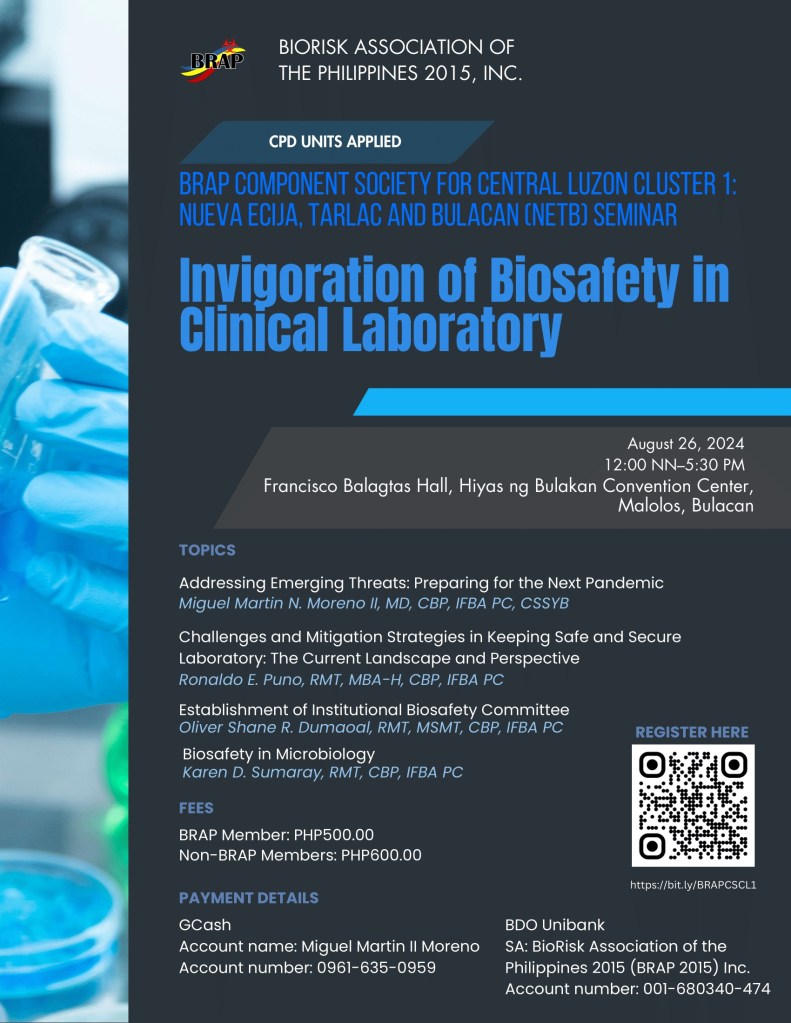
Synopsis of the lectures
by Ms Michaella B. Sayo
The series of lectures on biosafety and biosecurity collectively paint a detailed picture of the current landscape and strategies needed to manage biological risks effectively. They cover a range of topics from foundational challenges to specific measures for preparedness and safety.
Preparing for the next pandemic
Dr. Miguel Martin N. Moreno’s presentation shifts focus to preparedness for future pandemics and other emerging threats. He discusses proactive measures that laboratories should adopt to enhance their readiness. Key strategies include implementing advanced surveillance systems for early detection of potential outbreaks, developing rapid diagnostic tests, and advancing research in vaccines and therapeutics.Dr. Moreno emphasizes the role of biosafety in managing infectious agents and stresses that lessons learned from past pandemics and current innovations must inform and improve future preparedness efforts. This approach aims to equip laboratories with the necessary tools and knowledge to respond effectively to global health crises.
Challenges and Mitigation Strategies
The lecture by Mr. Ronaldo E. Puno highlights the core challenges in biosafety and biosecurity, such as the absence of comprehensive regulations and inadequate infrastructure. These gaps create significant obstacles in managing biological agents safely and securely. Sir Puno underscores the need for robust regulatory frameworks and enhanced capacity-building efforts. This includes improving laboratory infrastructure, ensuring the availability of necessary equipment, and training personnel to handle biological materials effectively. Addressing these issues is crucial for preventing accidental releases and mitigating risks associated with emerging threats like infectious diseases and bioterrorism.
Biosafety in Microbiology
Ms. Karen Sumaray’s lecture provides an in-depth look at biosafety within the field of microbiology. She addresses the evolving risks posed by microorganisms due to factors such as globalization, climate change, and technological advances. Ms. Sumaray highlights the importance of adhering to biosafety protocols to prevent accidental exposure, laboratory-acquired infections, and the potential release of harmful microorganisms into the environment. Her talk reinforces the necessity of safe handling practices in clinical laboratories to protect both laboratory personnel and the surrounding community from health hazards.
Institutional Biosafety Committee
Finally, Mr. Oliver Shane Dumaoal’s seminar focuses on the establishment and role of Institutional Biosafety Committees (IBC). He details the process of forming an effective IBC, which includes understanding regulatory requirements, defining member responsibilities, and conducting risk assessments. Mr. Dumaoal also emphasizes the importance of ongoing training for IBC members to ensure continuous compliance with biosafety standards. An effective IBC plays a crucial role in overseeing laboratory safety and ensuring adherence to biosafety protocols, thus maintaining a secure working environment.
Closing statement
These lectures offer a holistic view of biosafety and biosecurity. They underscore the importance of a multi-faceted approach to managing biological risks, which includes:
1. Regulatory and Structural Improvements: Developing comprehensive regulations, enhancing laboratory infrastructure, and increasing training and resources are fundamental to overcoming existing challenges.
2. Proactive Preparedness:Implementing early detection systems, advancing research, and preparing for future pandemics are essential for effective response to emerging threats.
3. Adherence to Biosafety Protocols: Ensuring safe practices in microbiology to protect against health risks and environmental contamination is crucial.
4. Institutional Oversight: Establishing and maintaining effective Institutional Biosafety Committees to oversee and enforce safety protocols ensures ongoing compliance and safety.
In summary, the integrated approach to addressing biosafety and biosecurity challenges involves a combination of regulatory reforms, preparedness strategies, adherence to safety practices, and institutional oversight. By focusing on these areas, laboratories and institutions can better manage biological risks and enhance their readiness for future challenges.
Picture gallery





 BioRisk Association of the Philippines 2015, Inc. (BRAP2015)