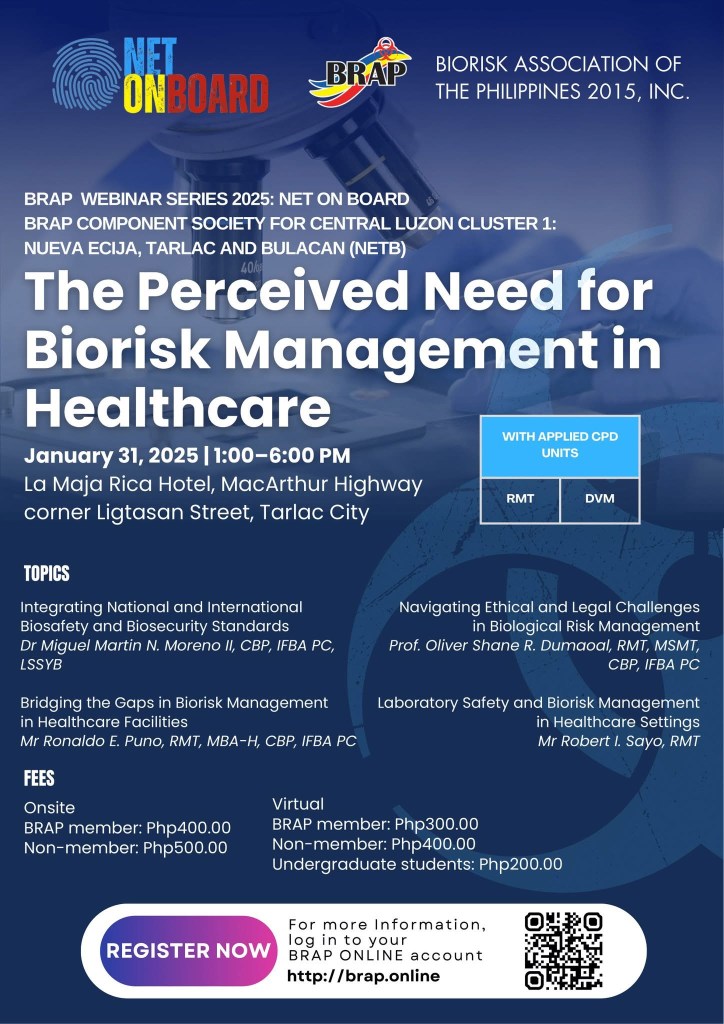
Lecture 1: Integrating National and International Biosafety and Biosecurity Standards by Dr Miguel Martin N. Moreno II, MD, CBP, IFBA PC, CLSSYB
Synthesis by Ms Maura Isais
Integrating national and international biosafety and biosecurity (BSS) standards ensures safe laboratory practices. The DOH Biosafety and Biosecurity Manual serves as the primary national guideline, aligning with but superseding WHO and ISO 35001:2019 standards due to local regulatory needs. Harmonization strategies include policy development, training, and collaboration with international organizations. Hospital administrators play a key role in implementing biosafety policies, ensuring compliance, and fostering a culture of safety. Through policy alignment, capacity building, and partnerships, institutions can strengthen biosafety frameworks and effectively manage biological risks.

Lecture 2: Bridging the Gap in Biorisk Management in Healthcare Facilities by Mr RonaldoE. Puno, RMT, MBA-H, CBP, IFBA PC
Synthesis by Ms Maura Isais
Biorisk management in healthcare facilities is critical for safeguarding public health, ensuring patient safety, and maintaining the integrity of healthcare systems. Despite the growing recognition of its importance, significant gaps remain in the implementation and effectiveness of biorisk management practices. This session explored the multifaceted challenges that healthcare facilities face, including inadequate training, insufficient resources, lack of standardized protocols, and limited interdepartmental communication.
By analyzing case studies and current best practices, we identify key strategies to bridge these gaps, such as enhancing workforce training programs, developing comprehensive risk assessment frameworks, and fostering a culture of safety and collaboration. Furthermore, we advocate for the integration of advanced technologies, such as data analytics and real-time monitoring systems, to improve biorisk assessment and response capabilities. Ultimately, it aims to provide actionable recommendations for healthcare leaders and policymakers to strengthen biorisk management frameworks, thereby enhancing resilience against biological threats and ensuring a safer healthcare environment for all stakeholders.
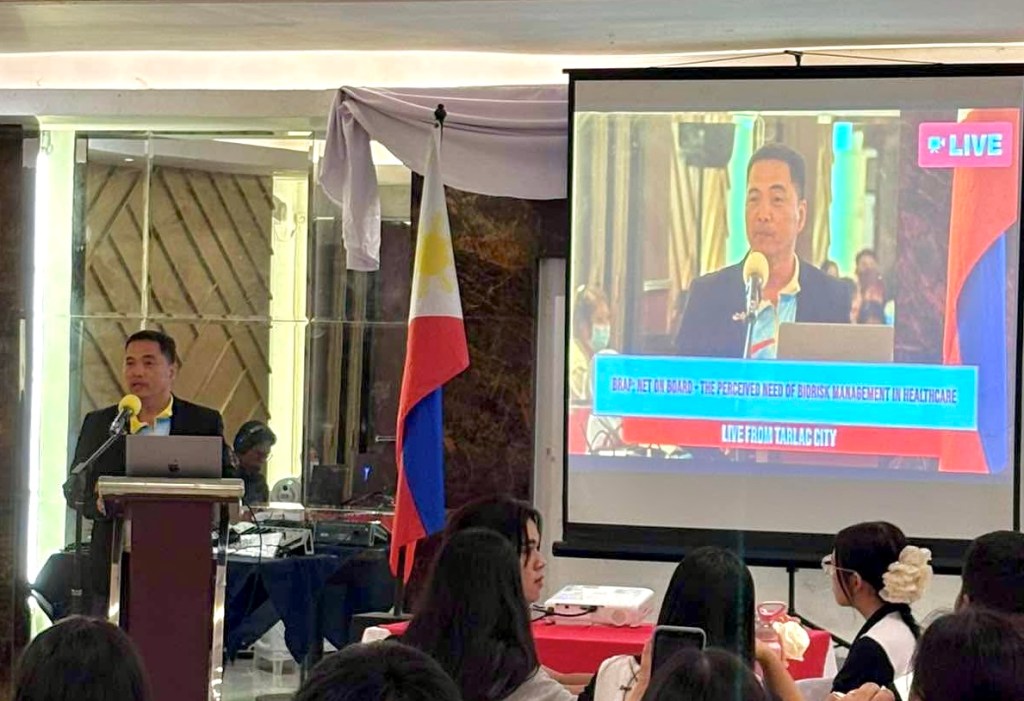
Lecture 3: Laboratory Safety and Biorisk Management by Mr. Robert I. Sayo, RMT
Synthesis by Ms Rowena Nucom Evangelista.
The presentation highlights the critical aspects of laboratory safety and biorisk management in healthcare settings. It emphasizes the importance of safety in protecting personnel, maintaining research integrity, and ensuring compliance with regulations. Key topics covered include identifying common laboratory hazards such as biological, chemical, and physical risks, along with the distinction between biosafety hazards and biosecurity threats. It also discusses the proper selection, use, and disposal of personal protective equipment (PPE) to minimize risks. Chemical and equipment safety are addressed through safe handling, storage, and disposal guidelines, as well as risk control measures for laboratory equipment. The presentation underscores the role of engineering controls, such as biosafety cabinets and HEPA filters, in maintaining containment and preventing exposure. Additionally, it outlines emergency procedures for biological spills, stressing proper response and incident reporting. Lastly, the need for continuous training and education through workshops, simulations, and online modules is emphasized to reinforce safety awareness and preparedness. Overall, the presentation promotes a proactive approach to laboratory safety through risk assessment, adherence to protocols, and ongoing education.
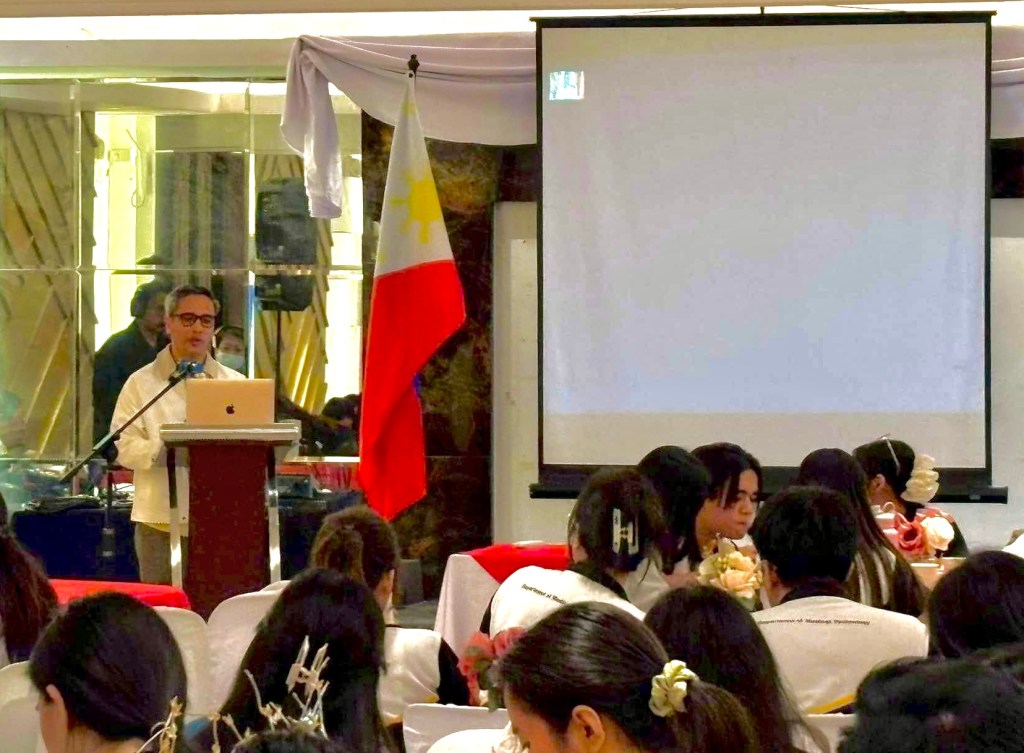
Lecture 4: Navigating Ethical and Legal Challenges in Biological Risk Management by Prof. Oliver Shane R. Dumaoal, RMT, MSMT, CBP, IFBA PC (Virtual presentation)
Synthesis by Ms. Rowena Nucom Evangelista
In the rapidly evolving landscape of biotechnology and biosecurity, ethical and legal considerations are essential for responsible Biological Risk Management (BRM). Prof. Oliver Shane R. Dumaoal’s lecture explored the intersection of ethics, law, and practical challenges in managing biological risks in research, healthcare, and laboratory settings.
From an ethical standpoint, key principles such as beneficence (promoting well-being), non-maleficence (avoiding harm), and equitable resource distribution guide decision-making in BRM. However, scientific innovation often presents ethical dilemmas, particularly when the pursuit of progress conflicts with safety, security, or fairness. Real-world case studies illustrate how these tensions manifest in laboratory research, highlighting the need for ethical vigilance.
On the legal front, BRM is governed by international conventions, national laws, and institutional policies that regulate the handling of biological materials and pathogens. The lecture covered critical topics such as dual-use research (where scientific advancements may be misused), informed consent in human research, and compliance with biosafety and biosecurity standards. These legal frameworks ensure accountability while balancing scientific freedom with public safety.
This lecture provided valuable insights for researchers, policymakers, and laboratory professionals, equipping them with the knowledge to apply ethical and legal principles in their professional practices. As biotechnology advances, an integrated approach to ethics, law, and risk management is essential to safeguard both scientific progress and public well-being.




 BioRisk Association of the Philippines 2015, Inc. (BRAP2015)