BRAP represented at PHICNA

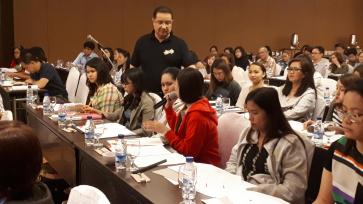
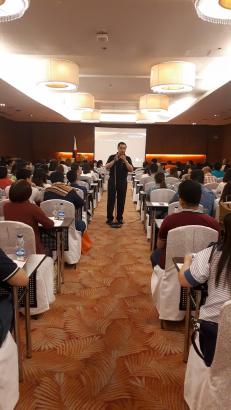
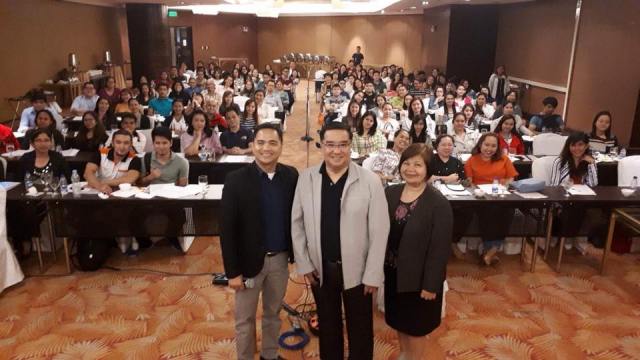
FB_IMG_1521697235796Last March 6, 2018, Mr. Billexter S. Bonifacio gave a lecture about Biosafety and Infection Prevention and Control in Laboratory Setting and Specimen Collection as part of the Philippine Hospital Infection Control Nurses Association (PHICNA) Infection Control Basic Competency Training Course (BCTC) held at The Lung Center of the Philippines. More than 170 participants comprised of infection control nurses, chief of hospitals and DOH staff members attended the BCTC of PHICNA.

Mr. Bonifacio is an active member of the BioRisk Association of the Philippines and a certified biorisk management professional by the International Federation of Biosafety Associations (IFBA). He is also the department manager of the infection control service
of St.Luke’s Medical Center – Quezon city. (BRAP Feature Article March 2018)

Posted in News and Updates | Leave a comment

BRAP Biosafety Credentialing and Competency Program

CDC-APHLThe BRAP Biosafety Credentialing and Competency Program was patterned after the Center for Disease Control (CDC) and the Association of Public Health Laboratories (APHL) Competency Guidelines. Here BRAP presents a program that aims to improve and uplift the culture of safety and security in our countries laboratories. We need to continue to see exposures to various pathogens and fatalities.  It is with this premise that biosafety credentialing and competencies become an important component of any biosafety and biosecurity program and an essential means to build the culture of safety and security.  Skills abilities knowledge crosswordsThese competency guidelines outline the knowledge, skills, and abilities necessary for public health laboratory (PHL) professionals to deliver the core services of PHLs efficiently and effectively. This is the backbone of the BRAP Biosafety Credentialing & Competency Program.

As part of a 2-year workforce project sponsored in 2012 by CDC and APHL, competencies for 15 domain areas were developed Program Logo 01by experts representing state and local PHLs, clinical laboratories, academic institutions, laboratory professional organizations, CDC, and APHL. The competencies were developed and reviewed by approximately 170 subject matter experts with diverse backgrounds and experiences in laboratory science and public health. The guidelines comprise general, cross-cutting, and specialized domain areas and are divided into four levels of proficiency: beginner, competent, proficient, and expert.

The 15 domain areas are (1) quality management system, (2) ethics, (3) management and leadership, (4) communication, (5) security, (6) emergency management and response, (7) workforce training, (8) general laboratory practice, (9) safety, (10) surveillance, (11) informatics, (12) microbiology, (13) chemistry, (14) bioinformatics, and (15) research. These competency guidelines were targeted to laboratorians working in PHLs, defined as governmental public health, environmental, and agricultural laboratories that provide analytic biological and/or chemical testing and testing-related services that protect human populations against infectious diseases, foodborne and waterborne diseases, environmental hazards, treatable hereditary MMWR 150515 Comptency Guidelinesdisorders, and natural and man-made public health emergencies. The competencies support certain PHL workforce needs such as identifying job responsibilities, assessing individual performance, and providing a guiding framework for producing education and training programs. Although these competencies were developed specifically for the PHL community, this does not preclude their broader application to other professionals in a variety of different work settings. The complete program of CDC-APHL is found in the Supplemental Issue of the CDC Morbidity and Mortality Weekly Report dated May 15, 2015. It may be downloaded here.

BRAP will launch its Biosafety Credentialing and Competency Program on March 26, 2018, during the 1st PAMET-BRAP CPD for 2018 at the Crowne Plaza Galleria, Ortigas Center, Quezon City.

Posted in News and Updates | 2 Comments

Biosafety in the Pharmacy

by Riel Anthony T. Oli, RPh, MSPharm, CBO

capsule of medicine  with stethoscope white  background.Pharmacy is a field in the allied health sciences that integrates chemical principles in biological systems. Pharmacists are known to be ‘drug experts’ for their vast knowledge on medicines that enables them to compound medications and to ensure efficacy of these substances to patients. Over the years, the practice of pharmacy in the country has slowly geared from compounding and dispensing of medication to clinical pharmacy practice.

            Hospital pharmacists prepare medications as needed by the in-patients. Sometimes, pre-manufactured drugs are not suited for a specific patient, thus hospital pharmacists extemporaneously compound these medications for their use. These medications may include, but not limited to, ointments, creams, gels, suppositories, trochees, chartula, syrups, suspensions, eye and ear drops, and oral solutions. They also prepare injectable fluids, cancer medicines, and radioactive medicines prior to administration to patients. Moreover, they also ensure proper storage, handling, dispensing, administration, and disposal of biological medicines such as vaccines, toxins, toxoids, and sera.

            Clinical pharmacists, however, ensure optimal pharmacotherapeutic outcomes for patients by working with the other members of the healthcare team. They review patient charts and provide necessary drug information to both healthcare professionals and patients.

            Medicines are helpful in the restoration of health and/or maintaining quality of life. However, when medicines are prepared and used inappropriately, these substances can cause harm. Unsanitary preparation of drug products can result to contamination that may lead to infections. Improper storage and handling of medicines can render these substances ineffective which will cause damage rather than benefits. Wrong route of administration may also render the drug useless. And, improper disposal of drug products can endanger the society and the environment.

            Currently, there are only two pharmacists in the country who are certified biosafety officers (CBOs) granted by the Philippine Advanced Biosafety Officers Training with oversight by the U.S. Department of State – Biosecurity Engagement Program. Though efforts have been made to increase awareness in biosafety in the field of pharmacy, it has only been limited to the academe where the said CBOs are practicing. Although there is a move for advocacy to increase consciousness, it is still not enough because the participants are mostly students who will spend years before they will practice in the field.

Riel Oli speaker for BRAP n Adamson UnivThrough the recommendation of Dr. Miguel Martin Moreno, the founding president of the Biorisk Association of the Philippines, Inc. (BRAP), biosafety was included as one of the topics in the recently concluded Philippine Society of Hospital Pharmacists’ (PSHP) 56th Anniversary and National Convention last February 28–March 3, 2018. The convention was held in CAP Convention Center in Camp John Hay, Baguio City, and was attended by more than a thousand hospital and clinical pharmacists from different institutions in the country.

Riel Oli speaker for BRAP n Adamson Univ2As a pharmacist, this opportunity was a chance to impart my knowledge on biosafety to my colleagues. It was a marvelous opportunity that permitted me to discuss the rationale of the need for pharmacists to be also involved in identifying and reducing biohazards and threats. Mitigation measures such as elimination and substitution, engineering controls, and personal protective equipment that are directly concerned with their current practice were emphasized. Participants were also given examples of actual events in which the response could have improved if the pharmacist’s intervention was guided by biosafety principles.

Riel Oli open forumThe response of the organizers and the participants was overwhelming. Because of this session, my colleagues are now aware of the significance of biosafety in their field and are interested for more events that can enhance their knowledge and skills in the said endeavor. I am truly grateful for BRAP for this wonderful chance that may open more doors for pharmacists and other professionals to protect the people and the environment from ‘bad bugs’. I heard BRAP is moving to open its July convention to Pharmacists.

Again, I would like to express my gratitude to BRAP founding president Dr. Martin Moreno, MD, CBP, CIFBA, PSHP President Ms. Hazel Faye R. Docuyanan, RPh, MS, and the Overall Convention Chair Ms. Rosalyn L. Pangan, RPh, MBAH.

* Prof. Riel Anthony T. Oli is a Faculty member of the College of Pharmacy, a Member of the Institutional Animal Care and Use Committee and OBE Core Group of Adamson University and a Member of Good Standing of BRAP (the BioRisk Association of the Philippines, Inc.)


Posted in News and Updates | Leave a comment