Last Holy Monday, March 26, 2018, the seminar/writeshop on creating your own Lab Biosafety Manual was given by course lecturer and BRAP Founding President Dr. Miguel Martin N. Moreno II. The writeshop was held at the Crowne Plaza Galleria, Quezon City. This PAMET-led event in collaboration with BRAP was attended by 116 participants.
The course objectives were:
- to understand common terminology and the processes used to develop biosafety laboratory manual, including the difference between policies, standards, guidelines, and standard operating procedures (SOP’s); and
- to assure the participants that the SOP’s they will develop will be self-evaluated and further validated later so that the same task may be completed by different people coming up with the same result and that the laboratory manual they will create will include biosafety, biosecurity and biorisk management en toto tailored for their institution.
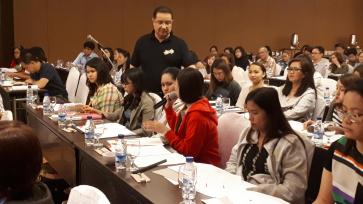 Dr. Moreno discussed the following topics: (a) plagiarism, (b) review of the four biosafety principles, (c) review of the five biosecurity elements, (d) review of biorisk management, (e) understanding documents in biosafety manual, (f) zeroing on SOPs, (g) planning biosafety manual, (h) the components of biosafety manual, biosecurity as part of the biosafety manual, (i) contents of the biosafety manual, (j) archiving systems, retention, updates, and versions, (k) appendices and indices, (l) referencing, major citations for the reference list, and introduction to the references used, and (m) the process of benchmarking from best manuals worldwide.
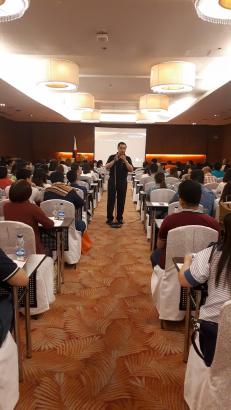 A BRAP ad hoc committee for the development of the Lab Biosafety Manual and Post-workshop assignments will be sponsoring for FREE the first 10 manuals submitted for accreditation from the NCR writeshop participants after a 2-month writing period (deadline: May 26, 2018).
Dr. Moreno also mentioned that BRAP members who completed the writeshop with Pre- and Post writeshop quizzes will be sent (upon request) BRAP Biosafety Credentialing and Comptency certificates for the session.
Mr. Ronnie Puno, PAMET National President, gave the opening remarks, while Dr. Leila Lany Florento, PAMET Former President, graciously introduced the day’s speaker. Both attended the writeshop throughout the end. BRAP Asst. Secretary Mr. Ariel Aquino came halfway through the lecture and helped close the day’s event.
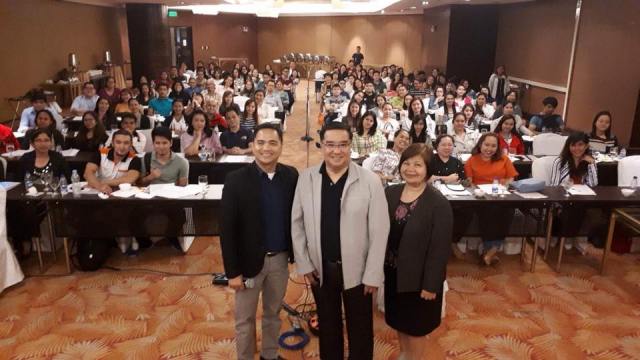
(L–R) PAMET National President Mr. Ronaldo Puno (RMT, MBA-H), Speaker and BRAP President Dr. Miguel Martin Moreno (MD, CBP, CIFBA) and Dr. Leila Lany Florento (PhD)


 Last March 6, 2018, Mr. Billexter S. Bonifacio gave a lecture about Biosafety and Infection Prevention and Control in Laboratory Setting and Specimen Collection as part of the Philippine Hospital Infection Control Nurses Association (PHICNA) Infection Control Basic Competency Training Course (BCTC) held at The Lung Center of the Philippines. More than 170 participants comprised of infection control nurses, chief of hospitals and DOH staff members attended the BCTC of PHICNA.