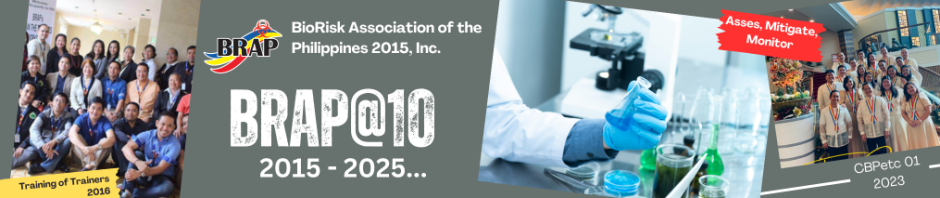
The Public Health Agency of Canada (PHAC) and the Canadian Food Inspection Agency (CFIA) are pleased to announce the publication of the Canadian Biosafety Handbook (CBH), 2nd Edition (2016), which is now available on the Canadian Biosafety Standards and Guidelines website in electronic format (HTML). The PDF version will follow in the near future.
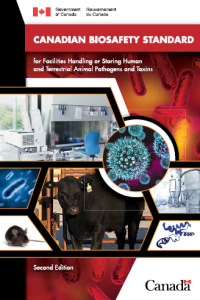 The CBH provides guidance to assist stakeholders and interested parties in meeting the requirements specified in the Canadian Biosafety Standard (CBS), 2nd Edition (2015), which was published electronically (HTML and PDF) on the same website in December 2015. Download a free copy here.
In line with the strategy: Planning for a Sustainable Future: A Federal Sustainable Development Strategy for Canada, the PHAC and the CFIA would like to promote the use of electronic resources to minimize paper consumption. As such, the CBH will be included in the CBS Biosafety App, free of charge, for all stakeholders and interested parties to access on their mobile devices and smart cellular phone; only the electronic version is being made available.
PREFACE of the CBS 2Ed
The Government of Canada’s Canadian Biosafety Standard (CBS), 2nd Edition, 2015, is a harmonized national standard for the handling or storing of human and terrestrial animal pathogens and toxins in Canada. Activities in Canada involving human and animal pathogens and toxins are regulated by the Public Health Agency of Canada (PHAC) and the Canadian Food Inspection Agency (CFIA) in accordance with the Human Pathogens and Toxins Act (HPTA), the Human Pathogens and Toxins Regulations (HPTR), the Health of Animals Act, and the Health of Animals Regulations.
The second edition of the CBS updates the biosafety standard originally published as Part I of the Canadian Biosafety Standards and Guidelines (CBSG), 1st Edition, 2013. The CBSG was developed to update and harmonize three existing Canadian biosafety standards and guidelines for the design, construction, and operation of facilities in which pathogens or toxins are handled or stored:
- Human pathogens and toxins: Laboratory Biosafety Guidelines, 3rd Edition, 2004 (PHAC)
- Terrestrial animal pathogens: Containment Standards for Veterinary Facilities, 1st Edition, 1996 (CFIA)
- Prions: Containment Standards for Laboratories, Animal Facilities and Post Mortem Rooms Handling Prion Disease Agents, 1st Edition, 2005 (CFIA)
The CBS sets out the physical containment, operational practice, and performance and verification testing requirements for the safe handling or storing of human and terrestrial animal pathogens and toxins. The CBS updates many requirements to be more risk-, evidence-, and performance-based, as well as incorporating new information in the field of biocontainment engineering. In addition, the CBS includes several new requirements and information to support the full implementation of the HPTA and the HPTR. On December 1st, 2015, the HPTR comes into force and the CBS will come into effect and supersede the CBSG. The CBS will be used by the PHAC and the CFIA to verify the ongoing compliance of regulated facilities with the applicable legislation. This will support licence applications, renewals, animal pathogen import permit applications, and, where applicable, the facility certification (and recertification) of containment zones.
The Guidelines originally published as Part II of the CBSG have also been updated and are published in the Canadian Biosafety Handbook (CBH), 2nd Edition, 2015. The CBH is a companion document to the CBS that provides core information and guidance as to how the biosafety and biosecurity requirements outlined in the CBS can be achieved. The CBH systematically addresses the concepts required for the development and maintenance of a comprehensive risk-based biosafety management program. In some instances, however, best practices or risk mitigation strategies other than those described in the CBH may also be acceptable to achieve the requirements of the CBS.
Original email of permission to distribute the CBS 2ed. c/o BRAP President.







 BioRisk Association of the Philippines 2015, Inc. (BRAP2015)